
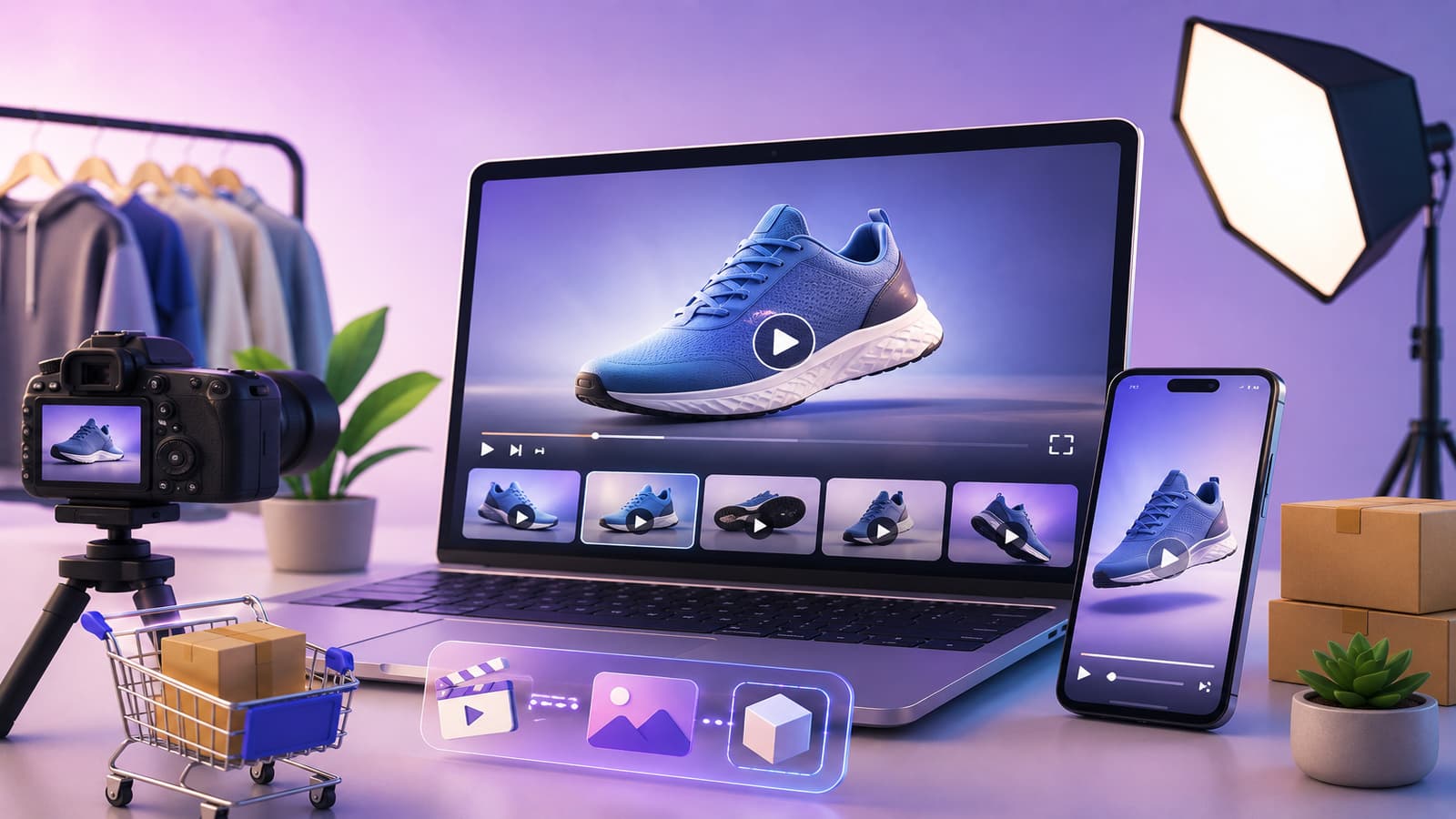
At this turning point of online retailing, consumer behavior data has become undeniable. Current industry metrics demonstrate that those engaging with product demo videos are 46% more likely to complete purchases compared to those viewing static imagery alone. Video no longer represents an extravagance for premium brands but rather the baseline expectation among modern shoppers; its inclusion has become expected and not luxury for modern shoppers. Not only can high-quality video content improve bottom lines but it can also reduce return rates, alleviate customer support teams' workload, and dramatically enhance overall user satisfaction ratings
Though product videos offer numerous advantages for retailers, a significant gap still remains as many retailers rely on traditional photography alone for marketing their product line. This represents a missed opportunity as product videos remain one of the highest return-on-investment marketing investments today; moving from static images to video can unlock millions of incremental revenue for any large catalog brand. Production can often be cost prohibitive but with modern video creation platforms you can now leverage professional content at a fraction of time and expense.
Understanding the Psychology of the Modern Video-First Shopper
Modern shoppers have come to expect an interactive video-first shopping experience that prioritizes transparency and movement. No longer content with seeing products through one "hero image", consumers demand multiple angles of viewing to witness items in action; static photos often feel incomplete or misleading on digital shelves leading to cart hesitation; video content eliminates uncertainty regarding exact color, material texture and physical scale of products, giving customers greater confidence when purchasing from digital shelves alone.
Video can create an emotional bond by positioning products as solutions to life problems, solidifying trust. A polished, professional aesthetic signals reliability. To learn how to align high-quality visuals with your unique brand voice, explore our comprehensive guide on visual brand storytelling.
Categorizing Video Formats for Maximum Conversion Impact
Not all ecommerce videos are equal, and for any successful 2026 strategy to emerge it requires an array of formats tailored specifically for specific stages in the buyer journey. Successful brands typically implement multi-layered strategies starting with classic product showcases on primary detail pages and supplemented by feature-benefit highlights that demonstrate technical utility - for instance the speed with which kitchen appliances blend or rugged durability of smartphone cases - before including feature-benefit videos that demonstrate technical utility like speed of mixing speeds for appliances like blenders.
Educational how-to videos and use-case demonstrations are vital for more complex items to prevent post-purchase regret and ensure customers feel supported. Social proof has become increasingly reinforced through testimonial-style content such as side-by-side comparison videos that clearly justify premium pricing over competitors. You can learn more about mapping specific content types to your customer journey by reviewing our in-depth analysis of the ecommerce sales funnel.
The AI Revolution in Video Production and Neural Rendering
Today's market demands that companies leverage cutting-edge AI image to video tools to quickly transform static photography into dynamic video assets without the need for manual editing. Traditional production cannot scale to large catalogs because shooting even 100 products would require months of labor and six-figure budgets; but using an image to video tool enables brands to produce cinematic content from existing imagery in mere minutes.
This sophisticated workflow employs neural rendering technology to interpret two-dimensional data and produce realistic three-dimensional camera movements such as smooth pans, cinematic zooms and artistic transitions in three dimensions. Not only does this save time but it also allows brands to effortlessly localize - they can repurpose one visual asset across numerous international markets without ever needing to reshoot one frame.
A Phased Strategy for Scaling Across Extensive Catalogs
Scaling video production requires a deliberate, disciplined approach in order to ensure an initial investment yields tangible returns quickly. Most high-growth retailers find success following a phased implementation model; starting with their top 50 selling products as proof of concept to establish "proof of concept" and track an immediate increase in conversion rates; once this ROI has been validated, then full category coverage ensures a consistent visual presence across their site.
Selecting an effective starting point is vital to building momentum, and our guide on choosing products for video marketing provides a proven framework to assist in this task. Once full coverage has been reached, rapid A/B testing should begin; different messaging angles and music tracks should be tested against one another to find what creative work best
Distribution Tactics and the Power of Multi-Channel Visibility
Content creation is only half the battle; strategic distribution will ultimately decide its impact. To get maximum impact from video campaigns, they should be placed prominently "above the fold" on product pages to capture attention before users scroll further down the page. Furthermore, video email marketing has proven itself effective at retention by often seeing 40-60% higher click-through rates compared with image-based newsletters.
Short-form vertical content has become the cornerstone of brand discovery on platforms such as TikTok, Instagram Reels and YouTube Shorts. Capturing mobile audience attention requires following specific creative rules such as high-energy editing and creating immediate value hooks; for more advice on managing these fast-growing social channels please see our latest short-form video tips.
Future-Proofing Your Brand with AI-Driven Consistency
As we move further into 2026, video-enabled brands will increasingly distinguish themselves from legacy media-reliant ones. Search engines and AI-led shopping assistants prioritize video content because its "densest" source of information makes its algorithms simpler to comprehend; having a video-rich site no longer just serves human visitors; it also ensures your products are correctly indexed and recommended by AI discovery tools used by consumers every day.
An automated approach to production ensures your brand maintains an equal standard regardless of how fast inventory turns over or how often new products launch each week. Internal teams also benefit from these efficiencies; many companies now employ AI video training for onboarding staff members to keep brand consistency across staff members. By adopting such techniques for video production and use in training/onboarding programs, ecommerce brands can build deeper trust with their audience while significantly decreasing creative overhead costs, thus seizing more market share in an ever-more-commoditized market place.
Conclusion
An integral component of an effective video strategy is measuring performance metrics with precision. Brands should look beyond simple view counts and focus on measuring high-value KPIs like conversion rate lift and "time on page." This feedback loop ensures continuous improvement, so each video produced becomes more effective over time. Creating automated, video-first models means meeting customers where they are and providing immersive shopping experiences they deserve.
Frequently Asked Questions
How do product videos increase ecommerce conversions?
Product videos help buyers reduce buyer uncertainty by showing scale, texture, and functionality of your product in action. By giving customers 360-degree views and showing product in action they gain trust for clicking "Buy Now."
Can AI video production meet the standards of premium brands?
Absolutely. Thanks to neural rendering and AI-powered tools, modern neural video production tools now produce cinematic camera movements and high-definition transitions that meet aesthetic standards of top retailers without incurring traditional film crew costs.
Can I create videos using only static product photos?
Yes. AI image-to-video technology was specifically created to read 2D data from your existing high-quality photography and convert it into dynamic, engaging video assets.
What's the best way to scale video across a large catalog?
Start with your 50 best-selling products to establish an ROI benchmark, then use automated AI platforms to batch process remaining categories so as to maintain consistency throughout.