
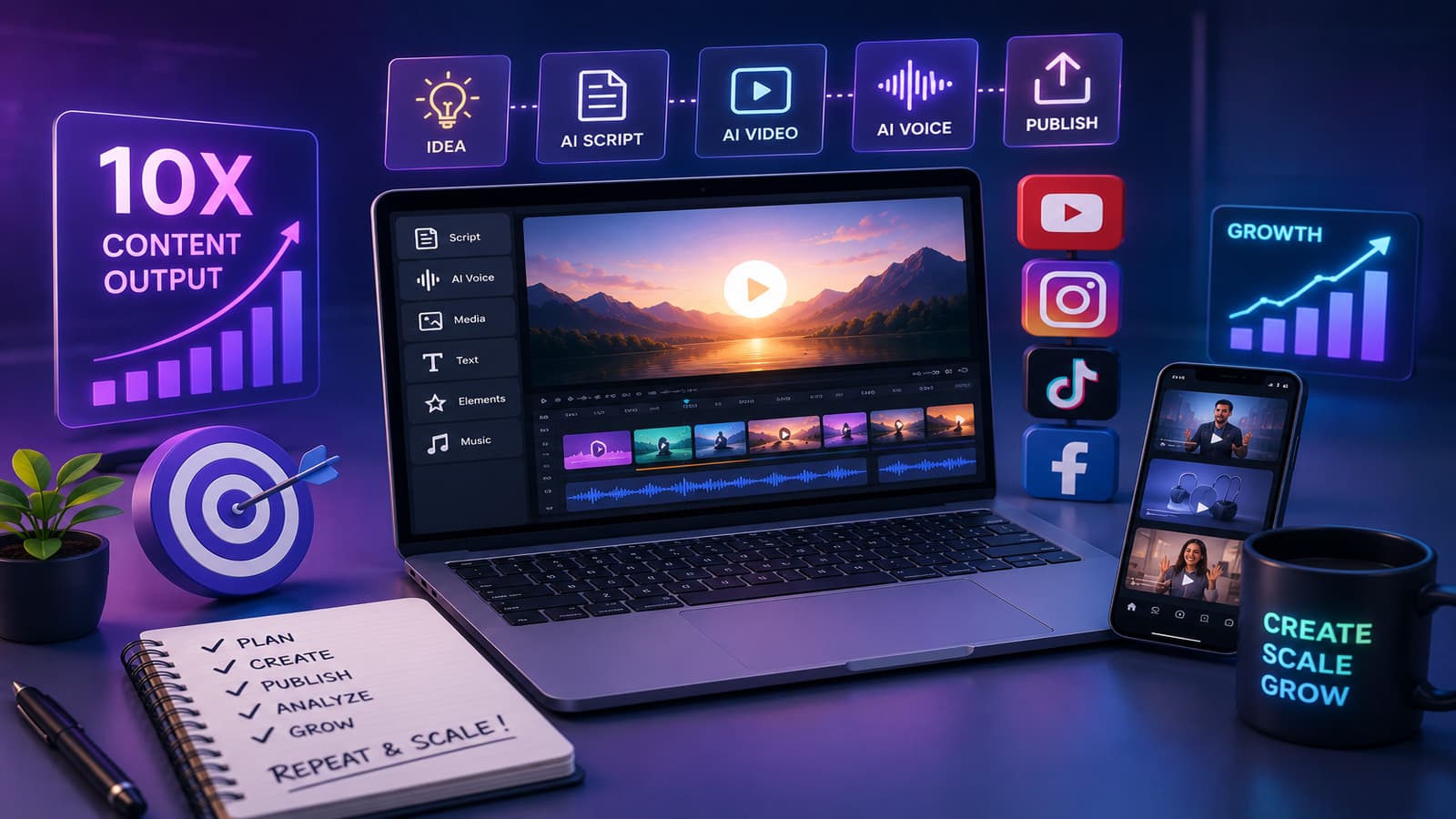
If you’ve ever tried to stay consistent with video, you already know how hard it can be. One video takes hours. Sometimes even days. And just when you’re done, you realize you need to create more. That’s where things start to fall apart. But here’s the good news-this is exactly where AI is changing the game. A smart video marketing strategy today is not about working harder. It’s about working faster and smarter. Let’s talk about how you can actually 10x your content output in 2026 without burning out.
What is a Video Marketing Strategy in 2026?
A video marketing strategy is simply a plan for creating, sharing, and using videos to reach your audience and grow your brand. But in 2026, things look a bit different. It’s not just about posting random videos anymore. It’s about having a clear video content strategy-knowing:
• What to create
• Who it’s for
• Where to post it
• And how often
Video is now one of the easiest ways to connect with people. Whether it’s short clips, tutorials, or ads, people prefer to watch instead of read. So if you’re not using video yet, you’re already behind. But don’t worry-you can catch up quickly.
How AI is Transforming Video Content Production
Creating videos used to mean scripting, shooting, editing, and repeating the process again and again. Now? AI handles most of that. You can make video content much faster because AI helps with:
• Writing scripts
• Turning text into visuals
• Adding voice automatically
• Editing clips in seconds
Instead of spending hours on one video, you can create multiple videos at the same time. For example, a marketer who used to post 2 videos a week can now easily create 10–15. That’s the power of AI in video content production.
Benefits of Using AI in Video Marketing Strategy
Using AI isn’t just about speed-it makes your whole process smoother. Here’s what you actually gain:
• Faster video creation – Go from idea to finished video in minutes
• Saves time and effort – No need for complex editing skills
• Scale easily – Create more content without hiring a big team
• Consistency – Post regularly without stress
• Cost-effective – Reduce production costs
Step-by-Step AI Video Marketing Strategy to 10x Output
Let’s keep this simple. Here’s a practical way to scale your content:
1. Start with Ideas – Think about your audience. What problems do they have? What do they want to learn? Write down simple ideas-don’t overthink it.
2. Turn Ideas into Scripts – Use AI to quickly generate short scripts. Keep them clear and focused.
3. Make Video Using AI – Now turn those scripts into videos. Add visuals, text, and voice. No need to shoot anything unless you want to.
4. Edit and Improve – Make small tweaks-adjust timing, visuals, or text. Keep it clean and easy to follow.
5. Publish and Distribute – Post your videos on platforms where your audience spends time. Repeat this process consistently. That’s how you build a strong video marketing strategy without getting overwhelmed.
Key Elements of a Strong Video Content Strategy
Not every video will perform well-and that’s okay. What matters is your overall plan. Here are a few things to focus on:
• Clarity – Know what your video is about
• Audience focus – Speak directly to the viewer
• Platform choice – Different platforms need different styles
• Consistency – Show up regularly. A good video content strategy is simple, repeatable, and focused.
Using AI for Video Advertising
AI is also making video advertising much easier. Earlier, running ads meant spending a lot on production. Now you can:
• Create multiple ad variations quickly
• Test different messages
• Adjust content based on performance. This means you don’t have to rely on one “perfect” ad. You can experiment and see what works. And the best part? You can do all this without a big team.
Real Use Cases of AI Video Marketing
AI-powered video isn’t limited to one area. It’s being used everywhere.
• Social Media – Create short videos daily to stay active.
• YouTube – Turn ideas into videos without filming everything.
• Business Promotion – Explain products in a simple way.
• Ads – Run multiple versions of ads to see what performs best. No matter your field, there’s always a way to use video better.
Tips to Make Video Content That People Actually Want to See
Let’s be honest-most videos don’t perform well. But small changes can make a big difference. Here’s what works:
• Start strong - Grab attention in the first few seconds
• Keep it simple - Don’t try to say too much
• Focus on value - Help, teach, or entertain
• Use clear visuals - Make it easy to understand
• Be consistent - Show up regularly. If people enjoy your content, they’ll come back.
Common Mistakes to Avoid in Video Marketing Strategy
Even with AI, some mistakes can slow you down. Watch out for these:
• Overcomplicating videos - Simple works better
• Ignoring your audience - Make content for them, not for you
• Posting randomly - Consistency matters
• Trying to be perfect - Done is better than perfect. Keep things simple and keep moving forward.
Future of Video Marketing Strategy with AI
AI is only getting better. In the coming years, you’ll see:
• Faster video creation
• Smarter content suggestions
• Better personalization
• Easier scaling of video content production. The gap between beginners and professionals is shrinking. Anyone can create high-quality videos now. And that’s a big opportunity.
Conclusion
Creating video content doesn’t have to be slow or stressful anymore. With the right video marketing strategy, and the help of AI, you can create more content, stay consistent, and reach more people-without burning out. Start small. Stay consistent. Improve as you go. And once you get into the flow, you’ll realize something important-Making videos is no longer the hard part.